
Keloid Treatment in Sugar Hill, GA
When a scar keeps growing past the wound.
Corticosteroid injections to flatten it and ease the itch.
planned at your free consultation
What Is a Keloid?
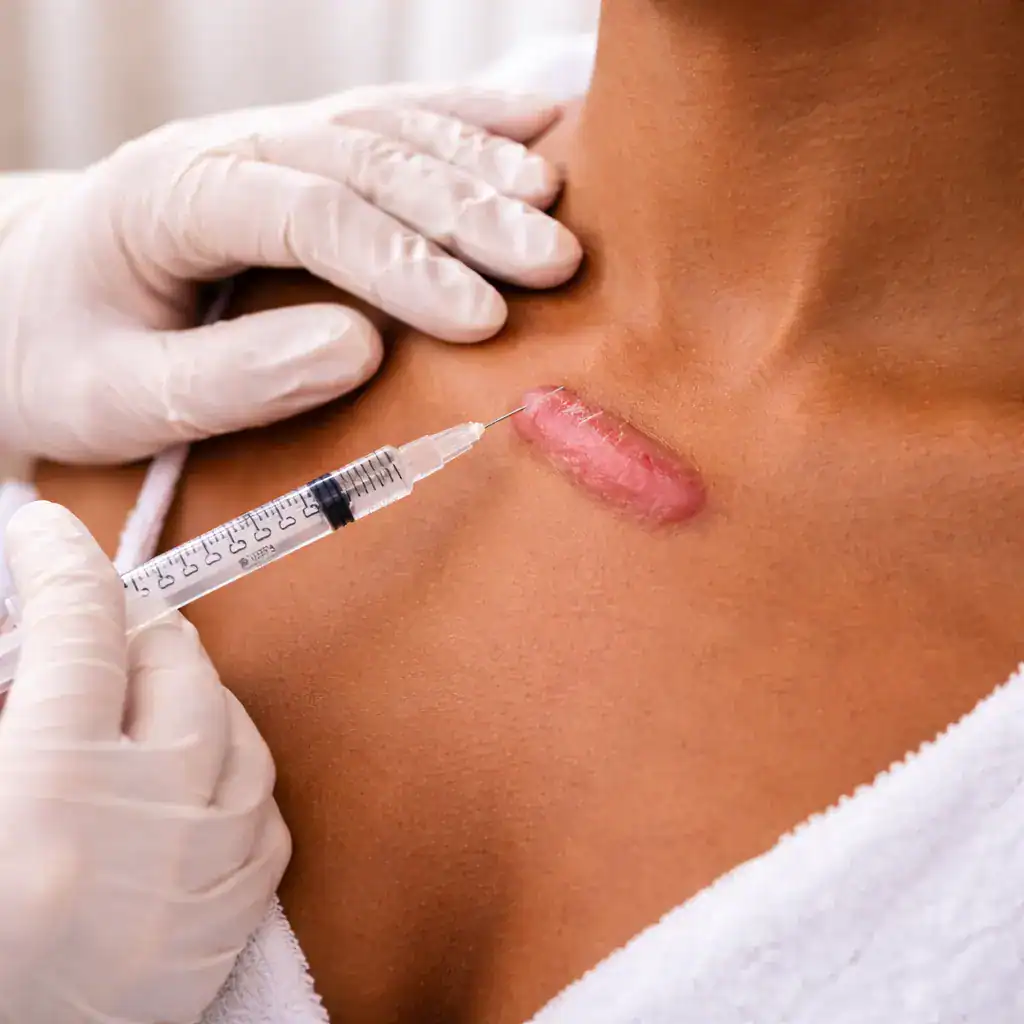
A keloid forms when your body makes too much collagen while it heals a skin injury. The result is a raised scar that spreads beyond the original wound and can keep growing. The American Academy of Dermatology guide to keloid treatment covers the options in more depth.
Keloids are not only cosmetic. They can be painful and itchy, and over a joint they can restrict movement. Corticosteroid injections into the scar are a first-line, evidence-based treatment, and they are how we treat keloids at our Sugar Hill clinic.
How Keloid Injections Work
Your provider injects a corticosteroid, usually triamcinolone acetonide, directly into the body of the keloid. The steroid slows the cells that overproduce collagen and calms inflammation. Over the following weeks the scar softens and flattens, its color moves closer to your natural skin tone, and the itch eases.
Where the medicine goes decides the result, so it has to stay within the scar. Placed too shallow, it reaches normal skin and can lighten or thin it. Placed too deep, it misses the scar. Some resistant keloids do better when injections are combined with silicone sheeting or pulsed dye laser.

Is Keloid Treatment Right for You?
Injections can treat a keloid almost anywhere on the body. A keloid that is still growing responds differently from an older, stable one, which is why every plan starts with an exam. Treatment can improve these features of the scar.
- Height and thickness
- Hard, rubbery texture
- Red or purple color
- Itch and discomfort
- Active growth
If your scar is sunken rather than raised, RF microneedling is the treatment to ask about.
When to wait
Injections are put off with an active skin infection in the area, a known steroid allergy, or during pregnancy. If you take a blood thinner, your provider will discuss the timing with you first.
Bring a list of your medicines and health conditions to your consultation so your plan is safe for you.
Keloid Treatment Cost in Sugar Hill
One price per injection session, shown here. Your provider examines the scar and plans the number of sessions at your free consultation.
Every plan includes
- A free consultation and scar exam
- A session plan based on size, age and location
- A dose review at each visit
- Aftercare guidance
Keloid Injection Session
A simple place to start
Most keloids need a series of about 3 to 4 sessions, spaced 4 to 6 weeks apart, each at the same price.
What Happens at Your Visit
-
Consultation and exam
Your provider examines the keloid, judges whether it is still growing, and talks through realistic expectations, the number of sessions likely needed and whether combining approaches would help.
-
The injection
The skin is cleaned, then triamcinolone acetonide goes into the scar through a fine needle at several points, so the medicine spreads evenly. A session takes 15 to 30 minutes, depending on the size of the scar.
-
Follow-up visits
You return in 4 to 6 weeks. Your provider checks how the scar has responded and adjusts the dose and injection pattern for the next session.

Why Choose Tactus Health?
Keloid injections are given by our medical team, under our Medical Director’s clinical oversight.
- Medical care, not a spa
- Keloid injections are a medical procedure, and ours are given in a medical clinic.
- A plan that follows your scar
- The dose and injection pattern are reviewed at every visit.
- Straight answers
- If a large keloid needs a surgical referral first, you hear that at your consultation.
- Prices in the open
- The session price is published here, and your plan is agreed before the first injection.
- Parking at the door
- Free spaces sit outside our Magnolia Office Park entrance.
Keloid Treatment FAQs
How many injections will I need?
Most keloids need a series of about 3 to 4 sessions spaced 4 to 6 weeks apart. Smaller, newer keloids may respond in 2 or 3 sessions, and larger, older ones may need 6 or more. Your provider gives you a realistic estimate for your scar at your consultation.
Will the keloid come back after treatment?
It can. Keloids sometimes return after corticosteroid injections, especially when keloids run in your family. Combining injections with silicone sheeting and pressure reduces the chance of recurrence, and your provider explains how to protect your result.
Does the injection hurt?
Injecting into dense scar tissue takes more pressure than an ordinary injection, so it can be briefly uncomfortable, usually a feeling of pressure and stinging. Most people find it very tolerable. A topical anesthetic or a local anesthetic block can be used first if you are sensitive to pain.
Can you treat keloids anywhere on the body?
Yes. Corticosteroid injections can treat keloids on the earlobes, chest, shoulders, back, abdomen and other areas. Technique and dosing are adjusted for the location and the skin around it.
What are the side effects?
The common ones are lightening of the skin around the injection site, thinning of the skin if the medicine reaches tissue outside the scar, and temporary pain. Repeat injections raise the chance of skin lightening, which is one reason the dose is reviewed at every visit.
Can a keloid be removed with surgery?
Treatment at our clinic is by injection. A very large keloid may do better with a referral to a dermatologist or plastic surgeon for surgical debulking before an injection series, and your provider will tell you if that applies to you.
Where to Get Keloid Treatment in Sugar Hill
Our clinic is in Magnolia Office Park on Buford Highway, an easy drive from across Gwinnett, Hall, Forsyth and Fulton counties. Keloid treatment is in person only, and parking is free.
1400 Buford Hwy NE, Suite K 2Sugar Hill, GA 30518
- Monday to Friday
- 9 am to 6 pm
- Saturday
- 10 am to 2 pm
Get a Plan for Your Keloid
Book a free keloid consultation in Sugar Hill.
Your provider examines the scar and plans your sessions before any treatment.
Important Safety Information. Intralesional corticosteroid injection for keloids is a medical procedure. Common side effects include lightening of the skin around the injection site, thinning of the skin if the medicine is placed outside the scar, and temporary pain. Repeat injections increase the risk of skin lightening.
It is not appropriate with an active infection in the treatment area, a known steroid allergy, or during pregnancy without a clear clinical reason. Individual results vary. Injections are given by our clinicians and our medical team under the clinical oversight of our Medical Director, Dr. Ashar N., DNP, APRN, FNP-C, PMHNP-BC.