
Age Spot Treatment in Sugar Hill, GA
When years of sun show up as brown spots on your face and hands.
IPL or a VI Peel, chosen for your skin tone, to lighten them.
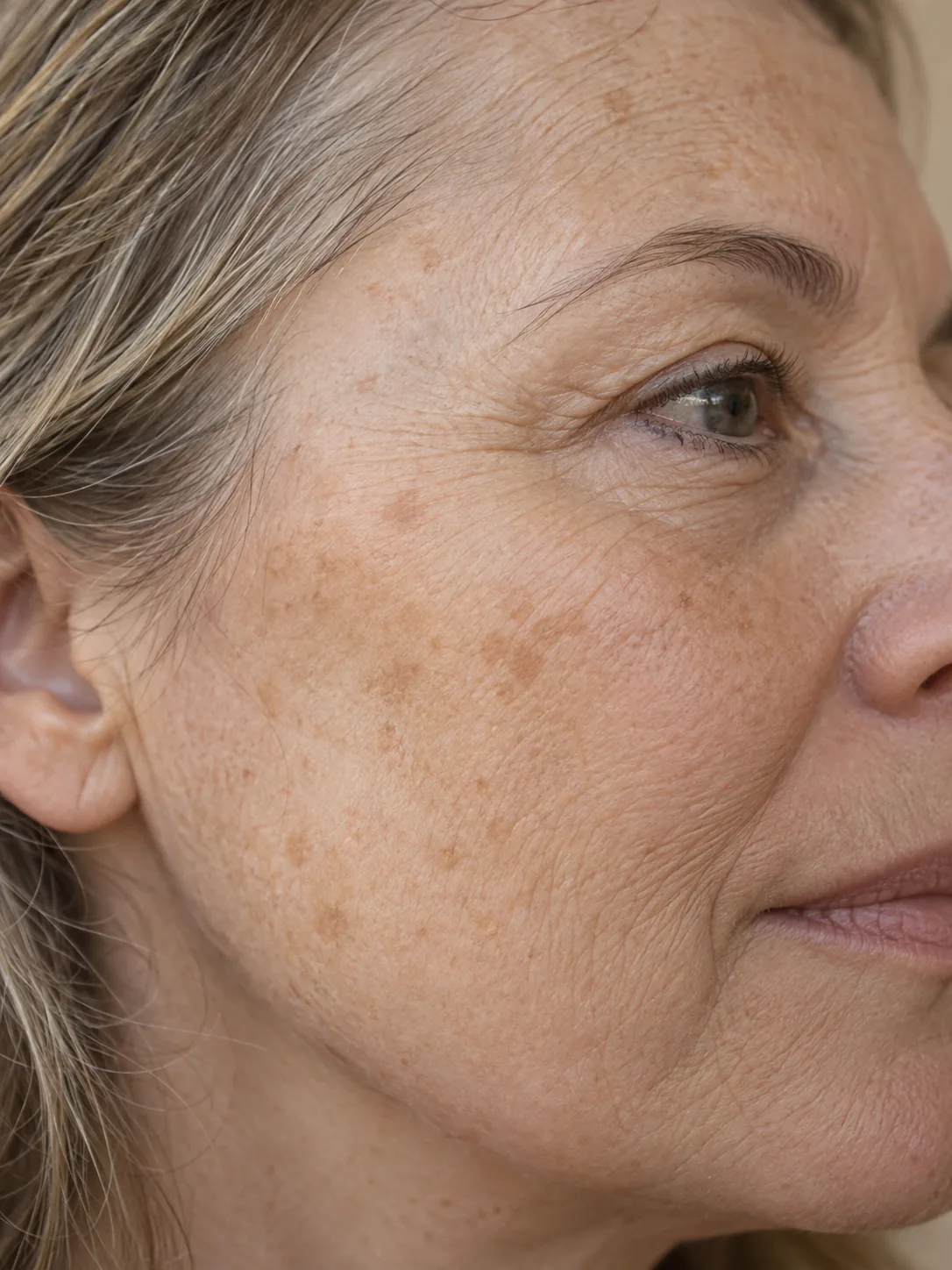
What Are Age Spots?
Age spots are flat patches of darker skin, tan to dark brown, round or oval, and anywhere from about a tenth of an inch to half an inch across. They gather where the sun lands most, on your face, the backs of your hands and your arms. You may hear them called sun spots, liver spots or solar lentigines, though they have nothing to do with your liver.
True age spots are harmless, and they do not usually hurt or itch. Some skin cancers can look similar, which is why every spot is examined before any treatment begins. Cleveland Clinic’s guide to age spots covers them in more depth.
Why Age Spots Appear
Ultraviolet light speeds up your skin’s production of melanin, the pigment that gives it color. Over years of sun exposure, that pigment collects and clumps in small areas, and those areas become age spots. Radiation therapy can leave them as well.
They turn up more often after fifty, but anyone can develop them. Fair skin, a history of bad sunburns, a lot of time outdoors and any use of tanning beds all make them more likely.
How We Treat Age Spots
We use two treatments for age spots, and your skin tone mostly decides between them. Both are planned at your free consultation, and each treatment page lists its prices.
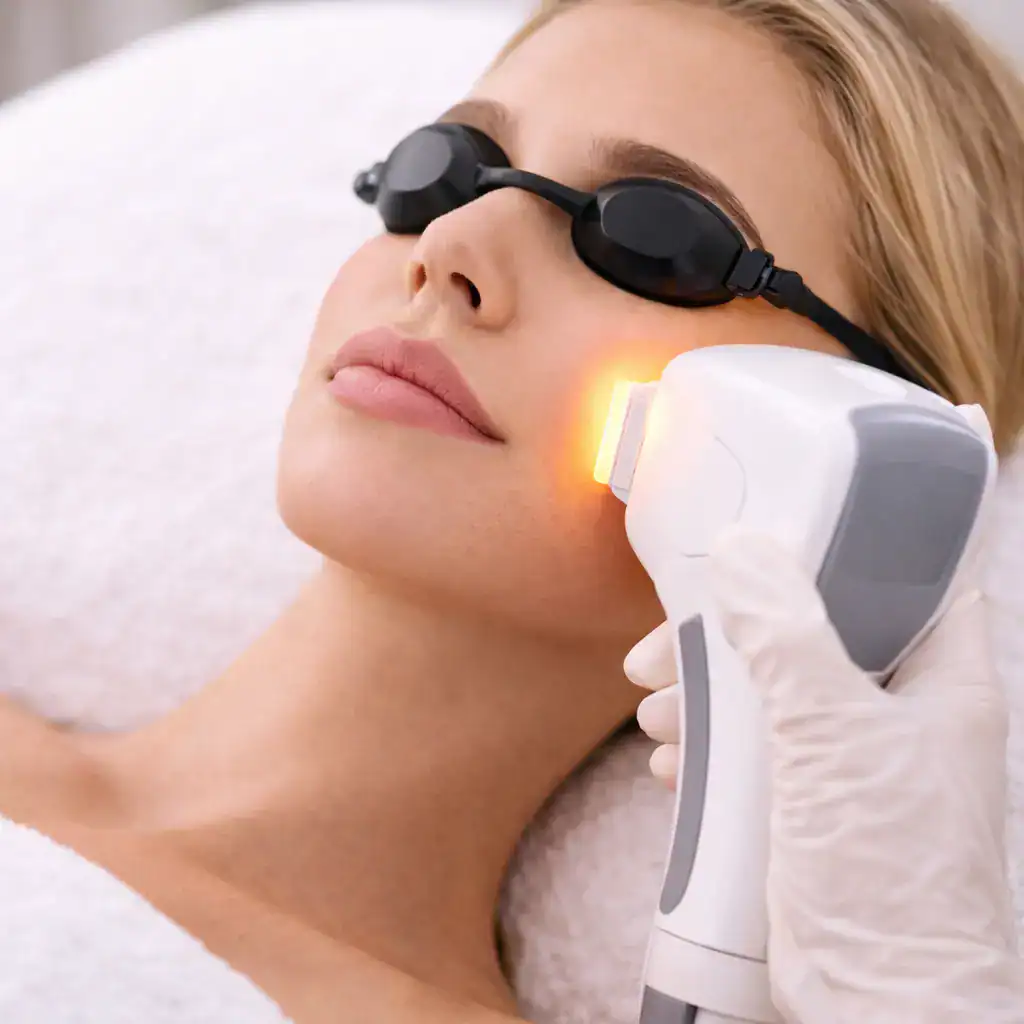
IPL Photofacial
Pulses of light that brown pigment absorbs. The spots darken, crust and flake away as they lighten. The usual choice for lighter to medium skin.
IPL page and prices
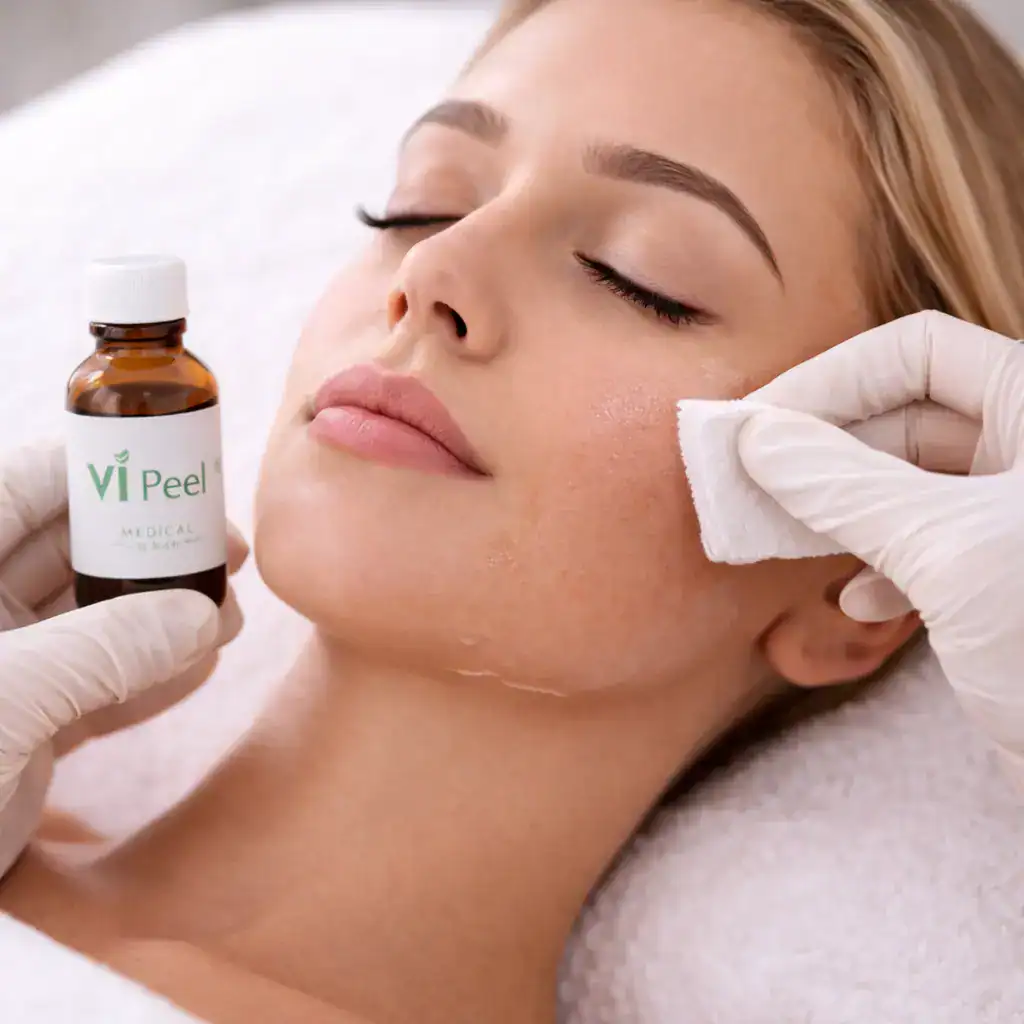
VI Peel
A medium-depth peel that lifts pigmented cells away so fresher skin replaces them. Formulated for every skin tone, so it fits when light is not the right match.
VI Peel page and prices

Protecting Your Skin at Home
Treatment lightens the spots you already have. Preventing the next ones is mostly down to daily habits.
- Broad-spectrum sunscreen, SPF 30 or higher, every day and reapplied through the day
- Shade in the middle of the day, when the sun is strongest
- A wide-brimmed hat and long sleeves outdoors
- No tanning beds, ever
Avoid lightening creams of unknown origin. Some have been found to contain mercury.
When to have a spot checked
See a dermatologist right away if a spot darkens or turns black, changes color, grows, bleeds or develops an irregular border.
We never treat a spot that is changing. It goes to a dermatologist first.
Is Age Spot Treatment Right for You?
It suits flat brown spots you would like lighter. Age spots usually need no treatment at all, so this is a cosmetic choice, not a medical necessity. If your marks followed a breakout or a scrape rather than the sun, read about dark spots, and for darker patches with other causes, see hyperpigmentation.
There are times we wait or refer you elsewhere. A recent tan means holding off on IPL. And if your spots turn out to be melasma, the matching brown patches on the cheeks, forehead or upper lip, they are assessed on their own, because IPL is not a first treatment for melasma.

Why Choose Tactus Health?
Age spot treatments are performed by our licensed aestheticians and Georgia-licensed cosmetic laser practitioners, under our Medical Director’s clinical oversight.
- Every spot looked at first
- Spots are examined before anything is treated, and a changing one is referred on.
- Matched to your skin tone
- Light or a peel is chosen for your skin, not offered as the same plan to everyone.
- A medical setting
- Treatment takes place inside a medical clinic rather than a day spa.
- Prices you can read first
- Each treatment page publishes its prices before you book.
- Parking at the door
- Free spaces sit right outside our Magnolia Office Park entrance.
Age Spot FAQs
Are age spots dangerous?
True age spots are harmless. Some skin cancers can look like them, though, so a spot that darkens, changes color, grows, bleeds or develops a ragged edge should be seen by a dermatologist right away.
Which works better, IPL or a VI Peel?
It depends mostly on your skin tone. IPL works best on lighter to medium skin, and darker skin is more prone to burns and dark marks after light treatments. The VI Peel is formulated for all skin tones. Your skin is assessed before either one is booked.
How many treatments will I need?
That depends on the treatment and on how many spots you have. IPL is usually planned as a short series, and the VI Peel page explains how peels are spaced. Your plan is set at your free consultation.
Will new spots appear after treatment?
They can. Treatment works on the spots you have now, and skin that keeps getting sun can form new ones, which is why daily sunscreen matters as much after treatment as before it.
Do fading creams help?
Prescription and over-the-counter lightening creams are one of the options Cleveland Clinic lists. Steer clear of lightening products of unknown origin, since some have contained mercury, which can harm the kidneys and nerves.
What should I avoid before treatment?
Skip tanning and fresh sun before either treatment, and tell us about any medicines you take, since some make skin more sensitive to light. A VI Peel also means pausing retinoids, scrubs and acids for a few days first.
Where to Get Age Spot Treatment in Sugar Hill
We are in Magnolia Office Park on Buford Highway, a short drive from Buford, Suwanee, Cumming and the rest of Gwinnett and Forsyth counties. Every treatment happens in person at this clinic, and parking is free.
1400 Buford Hwy NE, Suite K 2Sugar Hill, GA 30518
- Monday to Friday
- 9 am to 6 pm
- Saturday
- 10 am to 2 pm
Ask About Your Age Spots
Book a free consultation in Sugar Hill.
We look at every spot and match the treatment to your skin.
Important information. Spots are examined before treatment, and a spot that is changing is referred to a dermatologist. IPL can cause redness, tenderness and darkening of treated spots, and less often burns, blisters or lighter or darker patches, with darker skin at higher risk. A VI Peel causes several days of peeling.
Individual results vary. Treatments are performed by our licensed aestheticians under the clinical oversight of our Medical Director, Dr. Ashar N., DNP, APRN, FNP-C, PMHNP-BC.